20/01/2026
A personal and practical look at QiGong
I was always interested in the art of QiGong, always been drawn to Eastern practices and not even really knowing so; and like many curious Westerners I followed a path into yoga path.
But thinking back now, even as I write this, the interest in Chinese medicine and energy work was there much earlier.
In my very early twenties, I would see a Chinese herbal doctor on my lunch break. She would tell me I was too cold and damp, which I didn't understand and thought sounded so strange; she had me drinking deer velvet and lying still while placing accupuncture needles into me. The taste was foul. The needles I actually enjoyed.
Youth, freedom, money, drinking, travel – that path took over and this thread went quiet for a while.
Last year, 2025, after a total burnout of mind, body and business, I wasn’t looking for anything intense. Something a little more yin to my Kundalini and I was looking for ways to nourish my nervous system and rebuild my energy without asking more of it.
That’s when QiGong came back into view.
At its most basic level, QiGong is the practice of working with Qi – the life force that moves through the body. In Chinese medicine, Qi governs warmth, circulation, digestion, immunity, hormonal balance and mental clarity.
When Qi moves well, things tend to function smoothly. When it becomes depleted, stagnant or scattered, the body compensates often through fatigue, tension, digestive issues, emotional volatility or burnout. Welcome to my 36th year.
QiGong exists to support the cultivation and circulation of Qi.
The practice itself is simple. It’s made up of gentle movements coordinated with breath and attention. There is no strain, no pushing, no forcing the body into anything. Movements are often slow and repeated, which allows the nervous system to settle and the body to feel safe enough to reorganise.
At the core of QiGong are three things: posture, breath, and intention.
Posture is relaxed but upright. Joints are soft. The body is organised enough for energy to move, without being held rigidly.
Breath is natural, usually through the nose and over time it drops into the lower abdomen. This alone has a profound effect on digestion, hormonal signalling, and nervous system regulation.
Intention is simply where your attention rests. In QiGong, awareness stays inside the body, often in the lower abdomen or along the spine. Where attention goes, Qi follows.
Most foundational practices focus on the lower dantian, an area a few centimetres below the navel – the Nadis in Yogic speak. This is considered the body’s main energy reservoir. When energy is anchored here, digestion improves, anxiety lessens and there’s a felt sense of being more in the body and less in the head.
This is why QiGong can be so supportive during periods of burnout. Burnout isn’t just about doing too much, it’s often about energy moving upward and outward for too long. QiGong gently brings energy back down, into the systems that actually restore us.
Over time, people often notice steadier digestion, more regulated appetite, improved sleep and a calmer emotional baseline. Not because anything dramatic happened but because circulation was restored. Grounded. Quiet.
A basic QiGong practice doesn’t need to be complicated.
Stand with your feet hip-width apart.
Soften your knees.
Let your arms hang loosely by your sides.
Begin to breathe slowly through your nose.
On the inhale, feel the breath expand into the lower abdomen.
On the exhale, let your weight sink down through your feet.
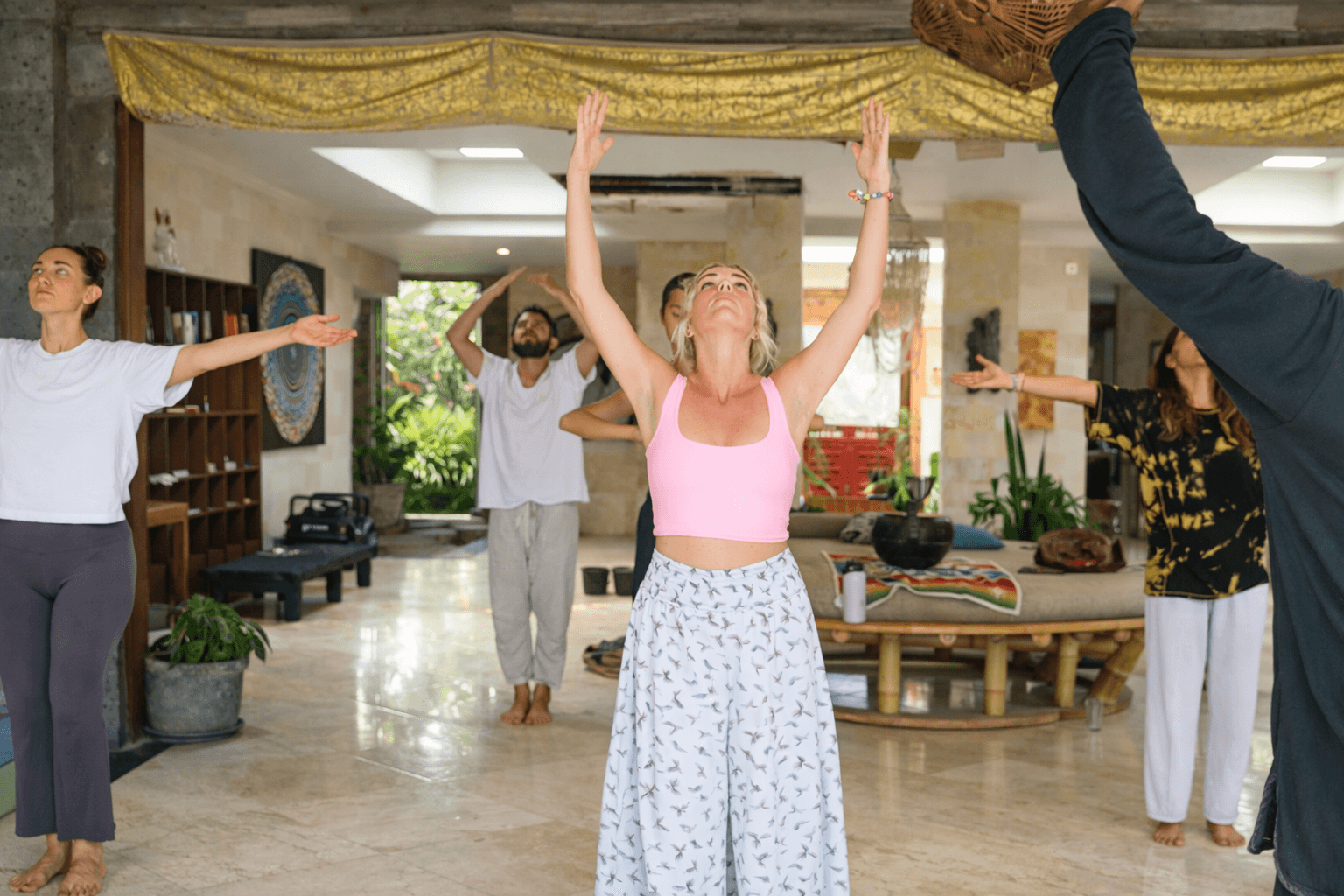
You can gently raise and lower your arms with the breath, following with your eye gaze, or simply stand still and breathe. Keep your attention in the lower belly.
Five to ten minutes is enough.
What matters is not the movement, but the quality of attention and consistency.
Looking back, I can see that what my old herbal doctor was pointing out cold, damp, depleted – it was never a judgement. It was information, sadly I was too young to understand. It’s not something I practice to achieve anything.
It’s something I return to when I want my energy to move again, in the right direction. Soft, slow, soul.