14/04/2026
The Ancient Alchemy of Tea
Cha Dao. The way of tea, is one of the oldest living practices on earth. Rooted in the principles of he, jing, yi, zhen. Peace. Quiet. Enjoyment. Truth. Monks carried it into their monasteries as medicine, as the thing that made long states of meditation possible. Shen Nong, father of Chinese medicine, named tea the king of medicinal herbs over two thousand years ago. The body has always known what science is only now catching up to.
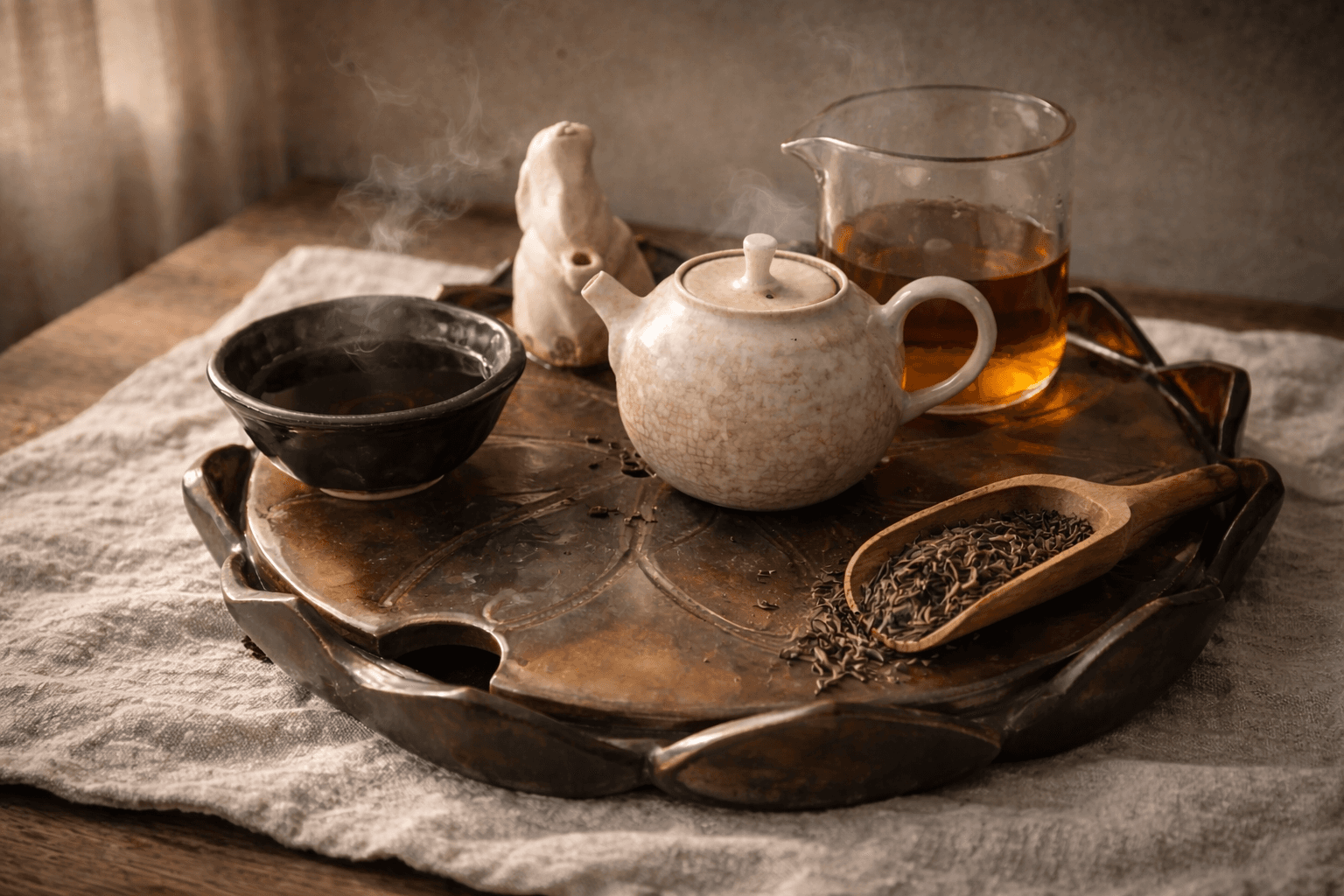
There is an elemental alchemy that happens when tea is prepared. Fire to heat the water. Earth of the leaf. Metal of the vessel. Water as the carrier. Wood as the living plant that began it all. Five elements. One bowl. An offering back to the body of everything nature is made of.
During Japan's Warring States period, centuries of clan warfare and bloodshed – something extraordinary was observed. Rival warlords would pause their battles. Enter the tearoom. Leave their weapons at the door. And kneel. Equally. Together. Something I always found interesting learning this. Tea seems to speak to our soul.
The ceremony demands the same thing from everyone: humility, attentiveness, presence. Aggression has no seat at the table. The tea creates neutral ground where words could be spoken that swords could not.
Sen no Rikyū, the great tea master of that era, said it plainly. Tea is peace in practice.
The Chinese emperors understood the same. Tea was gifted between dynasties, traded across the Tea Horse Roads as diplomatic currency, offered to rivals as a gesture of peaceful intent before negotiation. To share tea was to say: I am here. I am listening. We are, for this moment, the same.
It still works that way.
All true tea comes from a single species. Camellia sinensis. One leaf. What changes is what happens climatically and after picking – how long it oxidises, whether it is steamed, fired, rolled, aged, fermented. Time and heat and human hands turning the same leaf into six entirely different medicines.
What they all share:
In Traditional Chinese Medicine, the body is understood through five elements. Wood, Fire, Earth, Metal, Water. Each governs an organ system. Each has a tea that speaks directly to it.
Fresh, vibrant, alive. Green tea moves stagnation, supports the liver's work of filtering and clearing. The element of spring, of new growth, of things beginning to move again after stillness.
Warm, robust, sustaining. These teas support circulation and cardiovascular health. The element of summer, of heat, of the heart in full expression.
Balanced between worlds,neither fully green nor black. Oolong supports the digestive centre, the spleen, the body's ability to transform food into nourishment. The element of transition, of harvest, of integration.
Light, delicate, clean. White tea corresponds to the lungs and respiratory system, the organ of grief, of letting go, of breath. The element of autumn. Of what is refined and essential.
Rich, deep, fermented. Pu-erh supports the kidneys and fluid balance, the body's deepest reserves of energy and longevity. The element of winter. Of stillness, of what endures.
Matcha lives here but apart. The whole leaf, ground to powder. You consume the entire plant, not just an infusion. Every compound magnified, more L-theanine, more EGCG, more calm sustained energy. This was the tea of Zen monks in long zazen. It held them in stillness for hours. The body feels it immediately.
And then there are the ones that go a little deeper.
The more I learn about tea the more absurd it seems to call it simply tea.
One plant and somehow an entire universe.
Yellow tea, Huang Cha is one of China's rarest tea traditions.
It begins much like green tea but undergoes an additional process called men huang — sealed yellowing. The warm leaves are gently wrapped or covered and allowed to transform slowly in their own heat and moisture.
The process softens some of the grassy sharpness of green tea and creates something rounder, sweeter and more mellow.
It retains the polyphenols, amino acids and antioxidant compounds that make tea so interesting, while developing a chemistry, aroma and character entirely its own.
Yellow tea feels like patience in a cup. Held somewhere quietly between states.
GABA tea isn't another species or traditional tea family. It is created through a particular processing method where freshly harvested tea leaves are placed in an oxygen-free environment.
Something fascinating happens in that absence of oxygen.
The leaf naturally begins accumulating much higher concentrations of gamma-aminobutyric acid – GABA.
GABA is one of the body's primary inhibitory neurotransmitters. Part of our biological braking system. It helps regulate nervous system excitability and is intimately involved in the body's ability to move from activation toward calm.
Studies have explored GABA-enriched tea in relation to stress, relaxation and healthy blood pressure. What is particularly interesting is that we still don't fully understand how much of the experience comes from GABA itself and how much comes from its relationship with L-theanine, caffeine, catechins and the rest of the living chemistry of the leaf.
Which feels very tea to me. We keep trying to isolate the magic when perhaps the intelligence is in the whole.
Rock tea, or Yancha, comes from the Wuyi Mountains of Fujian.
Technically it belongs to the oolong family, but drinking a beautiful rock tea is something else entirely. This is a full body system connection tea.
The bushes grow amongst the cliffs, ravines and weathered mineral rock of Wuyi. The leaves are traditionally oxidised and roasted, producing teas that can be deep, mineral, floral, woody, smoky and almost impossible to describe.
The great rock teas are spoken about through the idea of yan yun, often translated as "rock rhyme."
It is less a flavour than an experience. A mineral depth. A sensation in the mouth and throat that seems to continue after the tea itself has gone.
And perhaps this is what tea continues to teach me.
The leaf is only the beginning.
Mountain, oxygen, fire, moisture, time and the hands of the maker all become part of what eventually arrives in the bowl.
One plant. Thousands of expressions. And an entire lifetime available in learning how to listen to them. Cha dao.
You don't need a teacher or ceremony or the right vessel.
Water. A leaf. The willingness to be present for what happens between them. Hold the bowl in both hands. Feel the warmth before the first sip.
Cha Dao was never about doing tea correctly or perfectly. It was always about using tea as a doorway. Into the body. Into the quiet that has always been there.
Every cup, an offering. To the plant. To the lineage. To yourself.
Om