14/04/2026
The Ancient Alchemy of Tea
Cha Dao · The He-art of Tea
Cha Dao. The way of tea, is one of the oldest living practices on earth. Rooted in the principles of he, jing, yi, zhen. Peace. Quiet. Enjoyment. Truth. Monks carried it into their monasteries as medicine, as the thing that made long states of meditation possible. Shen Nong, father of Chinese medicine, named tea the king of medicinal herbs over two thousand years ago. The body has always known what science is only now catching up to.
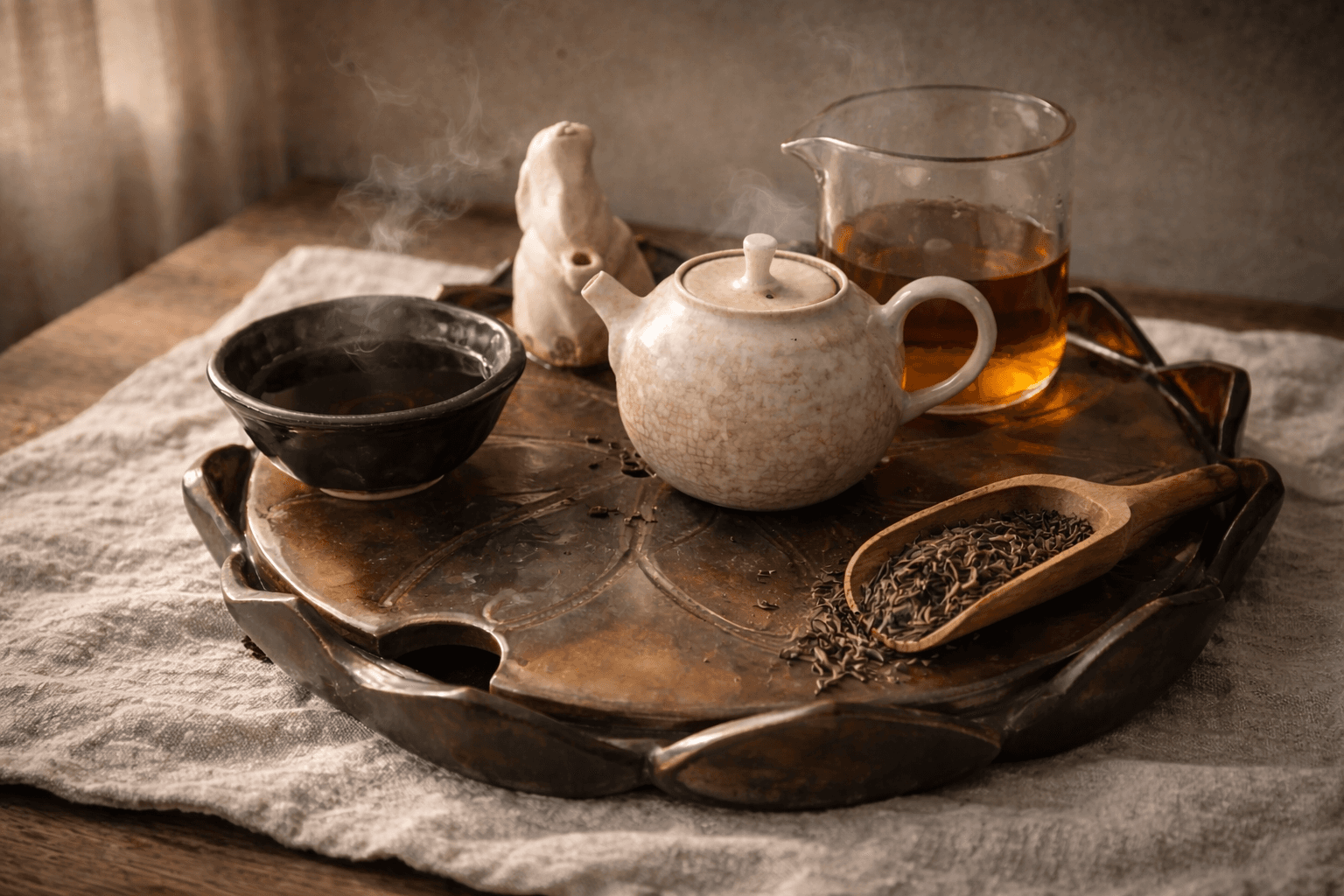
There is an elemental alchemy that happens when tea is prepared. Fire to heat the water. Earth of the leaf. Metal of the vessel. Water as the carrier. Wood as the living plant that began it all. Five elements. One bowl. An offering back to the body of everything nature is made of.
Tea and the warrior.
During Japan's Warring States period, centuries of clan warfare and bloodshed – something extraordinary was observed. Rival warlords would pause their battles. Enter the tearoom. Leave their weapons at the door. And kneel. Equally. Together. Something I always found interesting learning this. Tea seems to speak to our soul.
The ceremony demands the same thing from everyone: humility, attentiveness, presence. Aggression has no seat at the table. The tea creates neutral ground where words could be spoken that swords could not.
Sen no Rikyū, the great tea master of that era, said it plainly. Tea is peace in practice.
The Chinese emperors understood the same. Tea was gifted between dynasties, traded across the Tea Horse Roads as diplomatic currency, offered to rivals as a gesture of peaceful intent before negotiation. To share tea was to say: I am here. I am listening. We are, for this moment, the same.
It still works that way.
One plant. Every expression.
All true tea comes from a single species. Camellia sinensis. One leaf. What changes is what happens climatically and after picking – how long it oxidises, whether it is steamed, fired, rolled, aged, fermented. Time and heat and human hands turning the same leaf into six entirely different medicines.
What they all share:
The five elements · The five teas.
In Traditional Chinese Medicine, the body is understood through five elements. Wood, Fire, Earth, Metal, Water. Each governs an organ system. Each has a tea that speaks directly to it.
Wood · Green Tea · The Liver:
Fresh, vibrant, alive. Green tea moves stagnation, supports the liver's work of filtering and clearing. The element of spring, of new growth, of things beginning to move again after stillness.
Fire · Red & Black Tea · The Heart:
Warm, robust, sustaining. These teas support circulation and cardiovascular health. The element of summer, of heat, of the heart in full expression.
Earth · Oolong · The Spleen & Digestion:
Balanced between worlds,neither fully green nor black. Oolong supports the digestive centre, the spleen, the body's ability to transform food into nourishment. The element of transition, of harvest, of integration.
Metal · White Tea · The Lungs:
Light, delicate, clean. White tea corresponds to the lungs and respiratory system, the organ of grief, of letting go, of breath. The element of autumn. Of what is refined and essential.
Water · Pu-erh · The Kidneys:
Rich, deep, fermented. Pu-erh supports the kidneys and fluid balance, the body's deepest reserves of energy and longevity. The element of winter. Of stillness, of what endures.
The expressions.
White – The morning tea. The youngest bud, barely touched. Faintly sweet, almost floral. The closest to the living leaf.
Green – Mid-morning clarity. Stopped mid-transformation to hold the full spectrum intact. Vitamin C, chlorophyll, everything present.
Matcha lives here but apart. The whole leaf, ground to powder. You consume the entire plant, not just an infusion. Every compound magnified, more L-theanine, more EGCG, more calm sustained energy. This was the tea of Zen monks in long zazen. It held them in stillness for hours. The body feels it immediately.
Oolong – The afternoon tea. Partially oxidised, light and floral at one end, roasted and deep at the other. The same leaves reveal something different with every steep.
Black – The grounding tea. Fully oxidised. Dark, malty, sustaining. The tea most of the Western world grew up on, often consumed without presence.
Pu-erh – The digestive elder. After processing, it ferments again, months, years, sometimes decades. Living cultures, like fine cheese or kombucha. Smooth and earthy. The forest floor after rain.
The ritual.
You don't need a teacher or ceremony or the right vessel.
Water. A leaf. The willingness to be present for what happens between them. Hold the bowl in both hands. Feel the warmth before the first sip.
Cha Dao was never about doing tea correctly or perfectly. It was always about using tea as a doorway. Into the body. Into the quiet that has always been there.
Every cup, an offering. To the plant. To the lineage. To yourself.