20/04/2025
The most succulent bird for full body nourishment
A nourishment ritual for strength, warmth and repair.
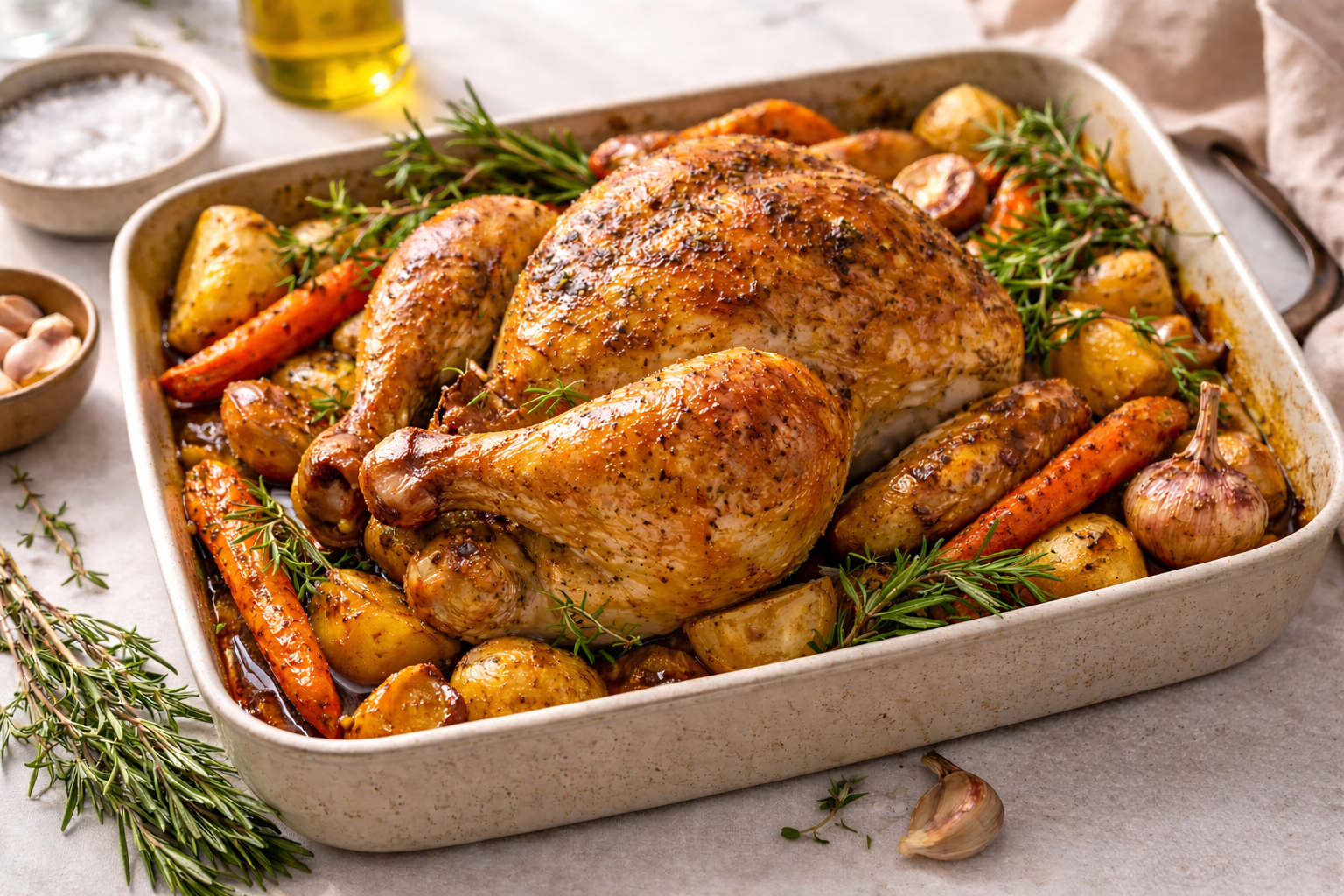
There are certain foods that quietly restore order in the body. A well-roasted chicken is one of them.
This is protein that doesn’t agitate. Fat that teaches the gallbladder how to flow again. Minerals that land gently rather than demand digestion. When prepared with care, roast chicken becomes medicine.
This meal is especially supportive when the body asks for grounding, warmth, and readily available nutrients. It is also ideal in colder months, after long periods of stress, intense training or digestive depletion.
I brine not to season, but to soften the fibres.
I roast hot first to seal and crisp.
Then slow the heat to allow the tissues to relax, absorb and restore.
I spent a month perfecting this recipe. I hope you love it as much and my family and I do!
Brine ingredients
Method
Dissolve the salt and honey fully in the water. Add remainder ingredients
Submerge the whole chicken completely. You may need to weigh down with baking paper and jar or place in smaller bowl. It is important the bird if fully submerged.
Cover and refrigerate for 4–6 hours. Remove from Brine and pat dry.
Do not exceed 8 hours or the meat can become overly salty.
The brine hydrates the flesh, softens the fibres, and mineralises the meat. This is about digestion as much as flavour.
Pat very dry with paper towels.
Place the chicken uncovered on a plate or rack in the fridge for a few hours before you cook. Even 2–3 hours makes a difference; overnight is ideal.
This step allows the skin to dry so it crisps rather than steams.
Heat the oven to 220ºC fanbake.
Remove the chicken from the fridge 45–60 minutes before cooking.
Allow it to come to room temperature.
Pat the skin dry again if needed.
This ensures a more even cook and prevents shock to the fibres.
Ingredients
Method
Rub the chicken lightly with oil or butter and pepper.
Stuff the cavity with lemon, garlic, onion and herbs.
Keep this simple.
Oven
Preheat to 220°C (200°C fan).
Stage one: seal and crisp
Roast at 220°C for 20 minutes.
Stage two: gentle cook
Reduce the oven to 180°C.
Continue roasting for 40–55 minutes, depending on size.
A useful guide is approximately 20 minutes per 500g total cooking time.
The chicken is ready when:
Remove the chicken from the oven.
Rest for 15–20 minutes, loosely tented with foil.
This allows the juices to redistribute and makes the meat calmer, juicier and easier to digest.
Slice the breast against the grain and pour over juices.
Serve simply with:
Strip the meat within one hour of cooling.
Store airtight.
Use within 24–48 hours or freeze.
The bones are best reserved for broth. (check out my recipe)
Brining hydrates and mineralises the meat.
Drying creates crisp skin.
Room temperature prevents uneven cooking.
Two-stage roasting balances moisture and texture.
Resting supports digestion and tenderness.
Nothing here is meant to be discarded, this is a zero waste meal. The bones and vegetables become the next layer of nourishment – a slow, gut-healing broth.
Check out my divine gut healing bone broth recipe or below for more Ayurvedic information.
Primary effect:
Vata-pacifying
Why:
Animal protein is one of the most stabilising foods for Vata when digestion is supported.
Secondary effects:
Best for:
